Orange, beetroot, and berries every day: what does this combination really offer?
Understand the nutritional and biochemical value of combining orange, beetroot, and berries, the potential benefits, and considerations for daily consumption.
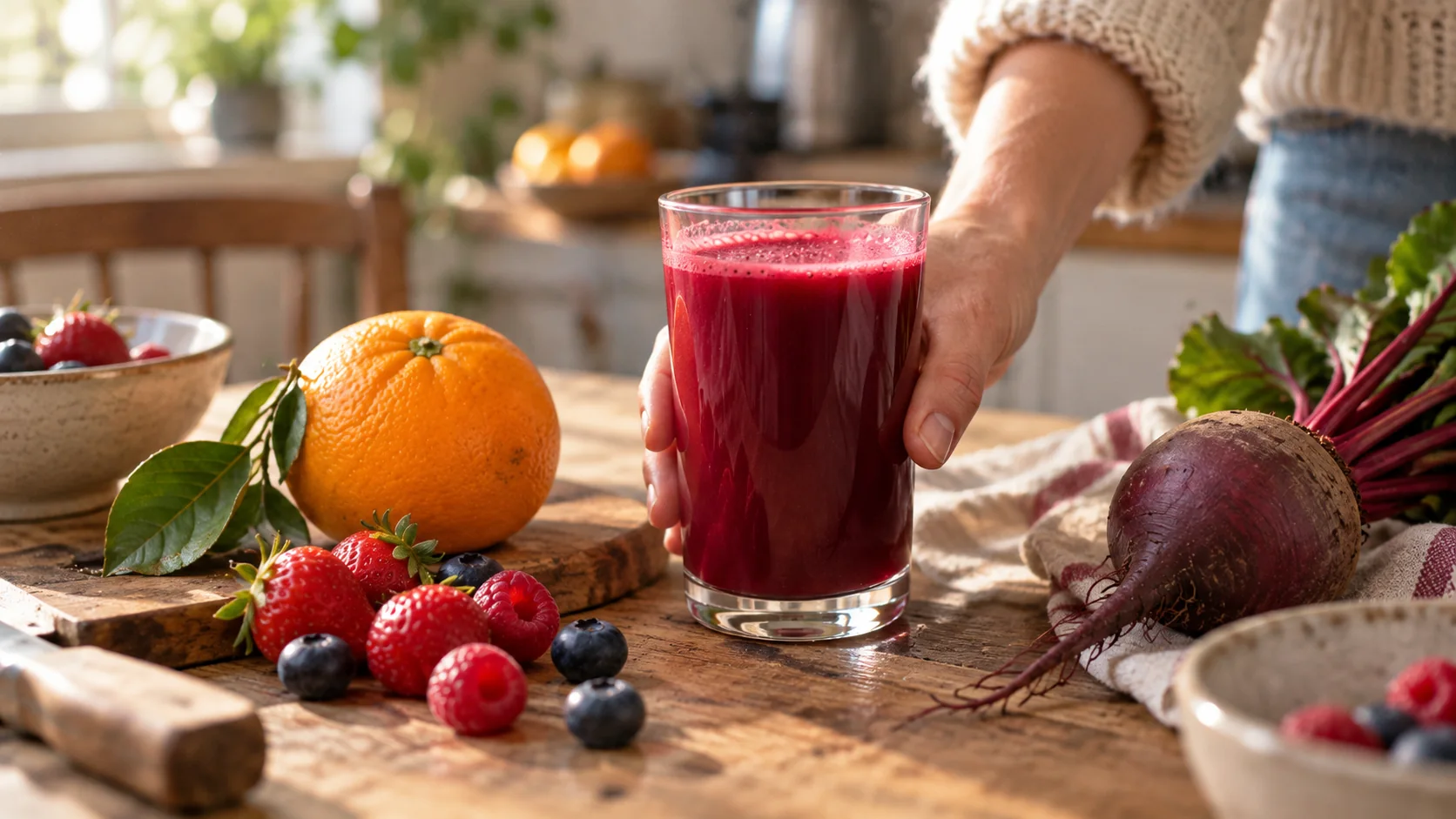
A drink made with orange, beetroot, and berries can provide vitamin C, folate, potassium, nitrates, flavanones, anthocyanins, and other phenolic compounds. Biochemically, these nutrients participate in processes related to nitric oxide production, cellular protection, collagen synthesis, iron absorption, and vascular function. But that does not mean the drink “detoxifies” the body or produces extraordinary results on its own. Its effect depends on the amount consumed, how it is prepared, and most importantly, the rest of the diet.
What does each ingredient add?
Orange: vitamin C and hesperidin
Orange is known for vitamin C, but it also contains flavanones, especially hesperidin. Vitamin C functions as an antioxidant and as a cofactor in different enzymatic reactions. It participates in collagen formation, contributes to immune system function, and may support the absorption of non-heme iron, which is found mainly in plant foods.
Hesperidin is partially metabolized by the gut microbiota, producing compounds that can enter circulation. However, its absorption varies considerably between individuals. Two people can consume the same amount and show different metabolic responses.
Some clinical trials have found potential effects of hesperidin-rich orange juice on blood pressure, but that does not make the drink a treatment for hypertension.
Beetroot: nitrate and nitric oxide production
The most interesting aspect of beetroot from a biochemical perspective is its nitrate content. After absorption, some of this nitrate returns to the saliva. Bacteria in the mouth convert nitrate into nitrite, which can later form nitric oxide.
Nitric oxide plays a role in blood vessel dilation and blood flow regulation. This is one reason beetroot is studied in the contexts of blood pressure and physical performance.
The process can be summarized as follows: Nitrate → nitrite → nitric oxide → vascular signaling.
Clinical trials show promising but not entirely consistent results. Some find reductions in blood pressure, while others observe no meaningful changes in certain populations.
Another nerdy detail: frequent use of strong antibacterial mouthwash may reduce nitrate conversion because it eliminates some of the bacteria involved in this process.
Berries: anthocyanins and other polyphenols
Blueberries, raspberries, blackberries, strawberries, and currants have different compositions, but they generally provide vitamin C, fiber, and phenolic compounds. Their red, purple, and blue pigments are often associated with anthocyanins.
After consumption, anthocyanins are transformed into several metabolites. We should not imagine that these compounds simply enter circulation intact and “fight free radicals.” Their activity is more complex and may involve cell signaling, endothelial function, and interaction with the microbiota.
Studies of blueberries and anthocyanins have observed improvements in some markers of vascular function, but responses depend on the dose, food, and population studied.
Is there synergy among the three?
The combination is nutritionally interesting because it brings together different groups of compounds: vitamin C and flavanones from orange; nitrates and betalains from beetroot; anthocyanins and other polyphenols from berries; plus potassium, folate, and small amounts of other micronutrients.
These components may act through complementary biochemical pathways, but it is not yet possible to say that mixing them produces a special effect or an effect greater than consuming the same foods separately.
Most studies analyze orange juice, beetroot, or berries in isolation. The potential effects of the mixture are therefore an extrapolation based on the ingredients’ composition, not a clinically proven property of the recipe.
Strained juice or blended drink?
This difference matters. Blending the whole ingredients without straining preserves more of the fiber. Fiber contributes to satiety, bowel function, and a more gradual absorption of carbohydrates.
When the drink is strained, much of that fiber is removed. It also becomes easier to consume quickly an amount of fruit that would probably take longer to eat whole.
The WHO considers sugars naturally present in fruit juice to be free sugars and recommends limiting their intake. This does not mean that 100% natural juice is the same as soda, but it does mean that amount and frequency still matter.
For regular consumption, I would therefore prioritize the blended version, unstrained and without added sugar.
A practical ratio
A balanced preparation could use: 1 whole peeled orange; 60 to 80 g of beetroot; 80 to 100 g of berries; and water and ice to achieve the desired texture. The final amount can be divided or adjusted to produce approximately 250 to 350 ml.
Depending on the fruit selected and the quantities, this preparation may provide approximately: 130 to 170 kcal; 30 to 38 g of carbohydrates; 6 to 9 g of fiber if it is not strained; a meaningful amount of vitamin C; and potassium, folate, nitrates, and different phenolic compounds.
These values are estimates. The variety, ripeness, storage, and processing of the ingredients change their nutritional composition.
What about before training?
Beetroot is studied as an ergogenic aid because of its nitrate content, but a homemade juice does not have a standardized concentration. Sports studies normally use controlled nitrate doses, often consumed around two to three hours before exercise.
Some studies find improvements in exercise economy or specific tests, while others do not observe improved performance. This drink can therefore be part of a pre-workout meal, but we should not assume that any amount of beetroot will work like a standardized sports supplement.
Does it make sense to drink it every day?
It may, provided that the drink does not constantly replace whole fruits and vegetables; does not include added sugar, honey, or syrups; is considered within total energy and carbohydrate intake; does not cause gastrointestinal discomfort; and is not used to compensate for a diet lacking variety.
Daily consumption is not required. Rotating fruits, vegetables, and preparation methods will probably provide a broader variety of nutrients and bioactive compounds.
People with diabetes, low blood pressure, kidney disease, a history of kidney stones, or medication use should assess frequency and quantity individually with a qualified professional.
Conclusion
Orange, beetroot, and berries form a nutrient-dense and biochemically interesting combination. The drink can provide vitamin C, flavanones, nitrates, anthocyanins, folate, potassium, and fiber. Its components have plausible mechanisms related to vascular function, nitric oxide production, and cellular protection.
Even so, it is not a “detox,” does not replace a balanced diet, and does not offer guaranteed benefits simply because it is consumed daily. The best version uses whole ingredients, is not strained, contains no added sugar, and fits within a varied diet rather than being treated as a magic formula.
What the science says
- Orange provides vitamin C, which acts as an antioxidant, serves as a cofactor in collagen synthesis, and supports the absorption of non-heme iron.
- Beetroot is rich in nitrate, which oral bacteria can reduce to nitrite and which can subsequently be converted to nitric oxide, with effects on vascular function.
- Berries provide anthocyanins and other polyphenols whose metabolites appear to influence cell signaling and endothelial function.
- Clinical trials of hesperidin-rich orange juice, beetroot, and berries show promising results, but findings are not always consistent across populations.
- The WHO considers sugars naturally present in fruit juices to be free sugars and recommends limiting their intake.
How to apply it
- Choose the blended, unstrained version to preserve fiber and reduce the glycemic spike.
- Avoid adding sugar, honey, or syrups; the fruit’s natural sweetness is enough.
- A practical ratio is 1 whole orange, 60 to 80 g of beetroot, 80 to 100 g of berries, plus water and ice to taste.
- If you use it before training, remember that homemade beetroot does not provide a standardized nitrate dose like a supplement.
- Vary fruits and vegetables throughout the week instead of repeating the same recipe every day.
This drink is not a “detox,” does not replace a balanced diet, and does not guarantee extraordinary benefits simply because it is consumed daily. It is not yet possible to say that mixing the three ingredients produces a special effect or an effect greater than consuming each separately. People with diabetes, low blood pressure, kidney disease, a history of kidney stones, or medication use should assess frequency and quantity individually with a qualified professional. This content is for educational purposes and was created by a nutrition student; it does not replace personalized guidance from a qualified professional.
References
notice.txt: This content is for educational purposes and was created by a nutrition student. It does not replace personalized guidance from a qualified professional.
Keep reading
 Science explained
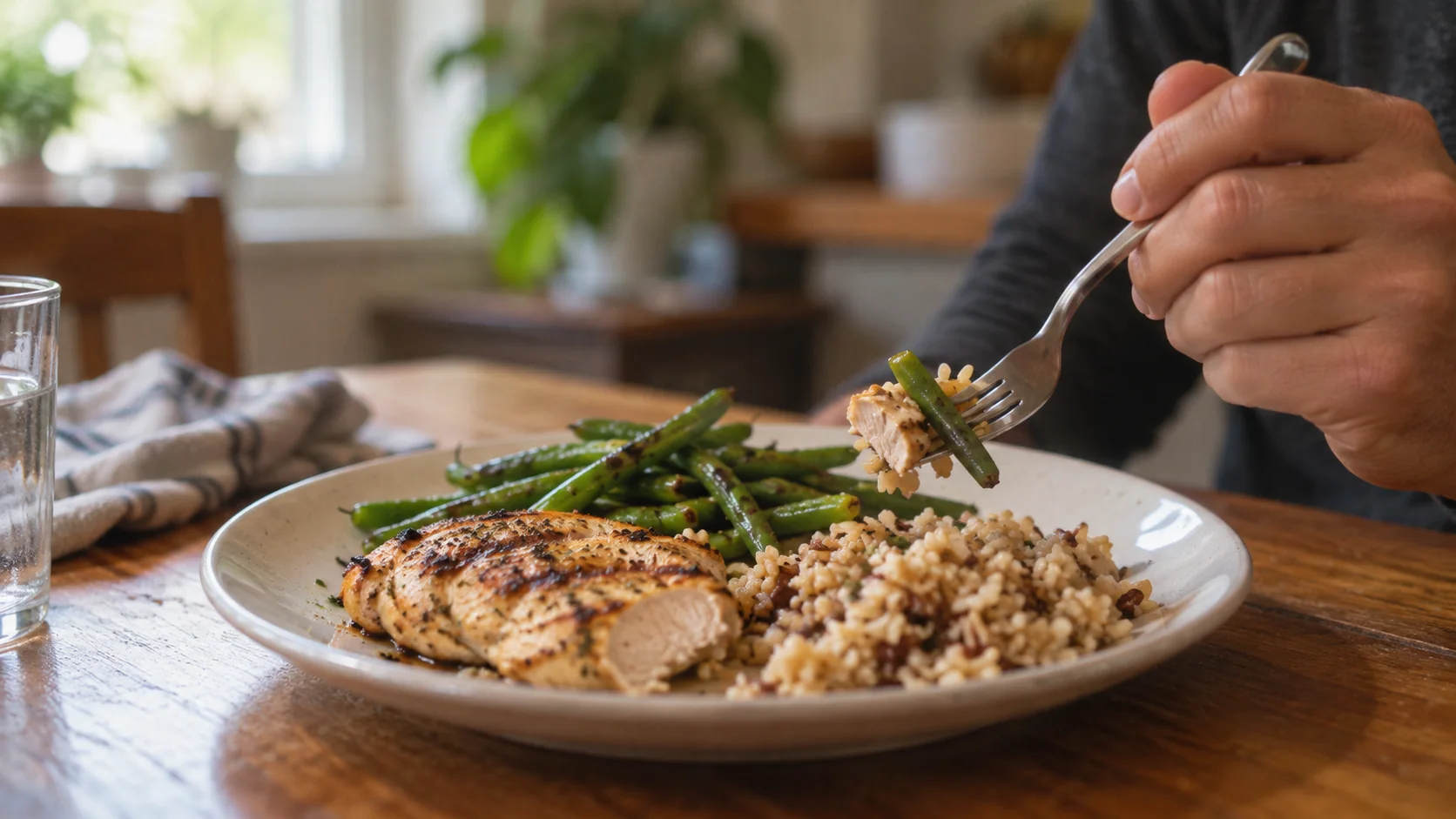
How much protein is really on this plate?
Weighing everything is tedious. But you can estimate fairly well with three visual references I use every day.
 Training
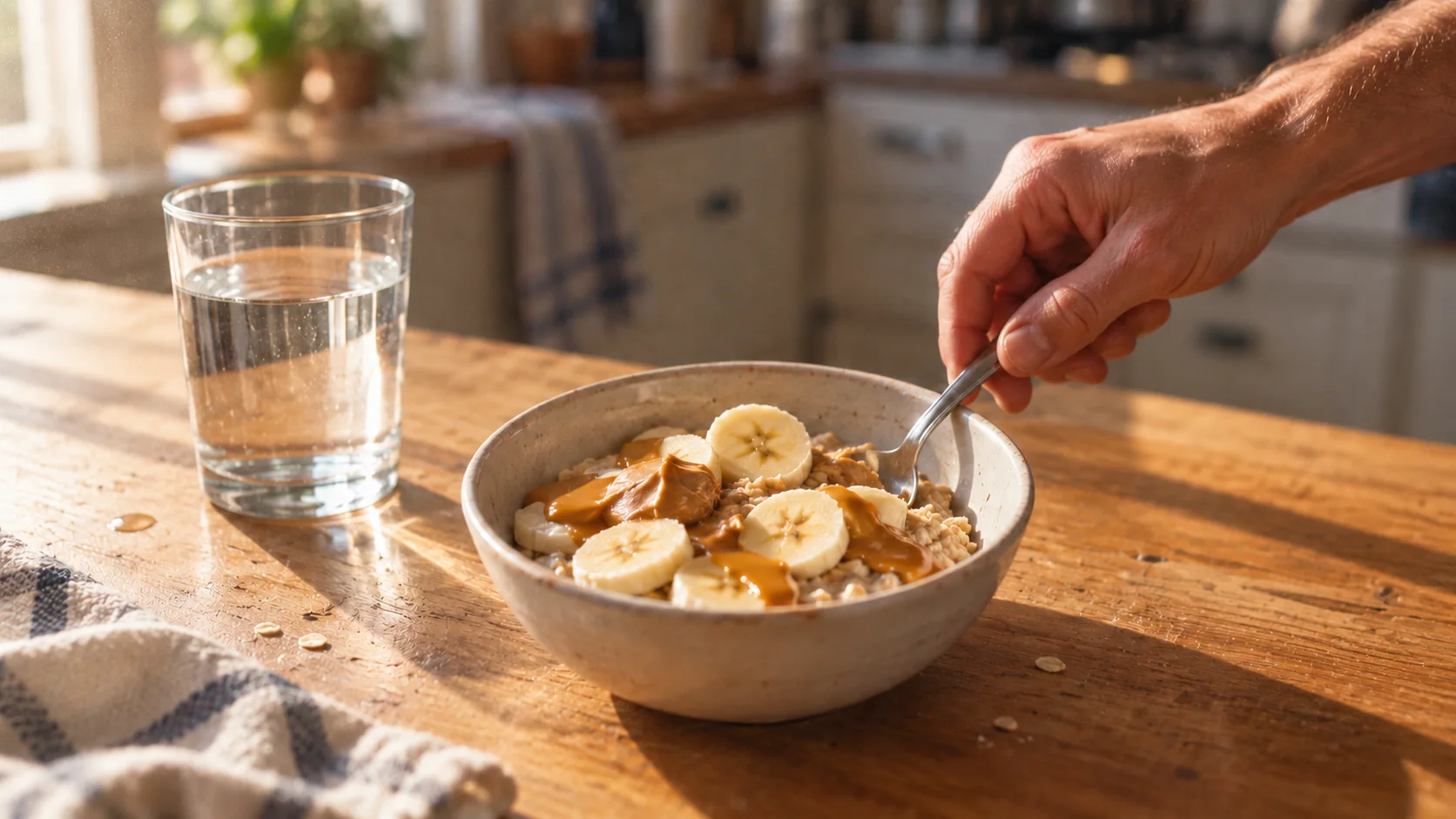
What I eat before training
My real routine as a student: no magic formulas and no expensive shakes. Just what works on busy mornings.
 Performance
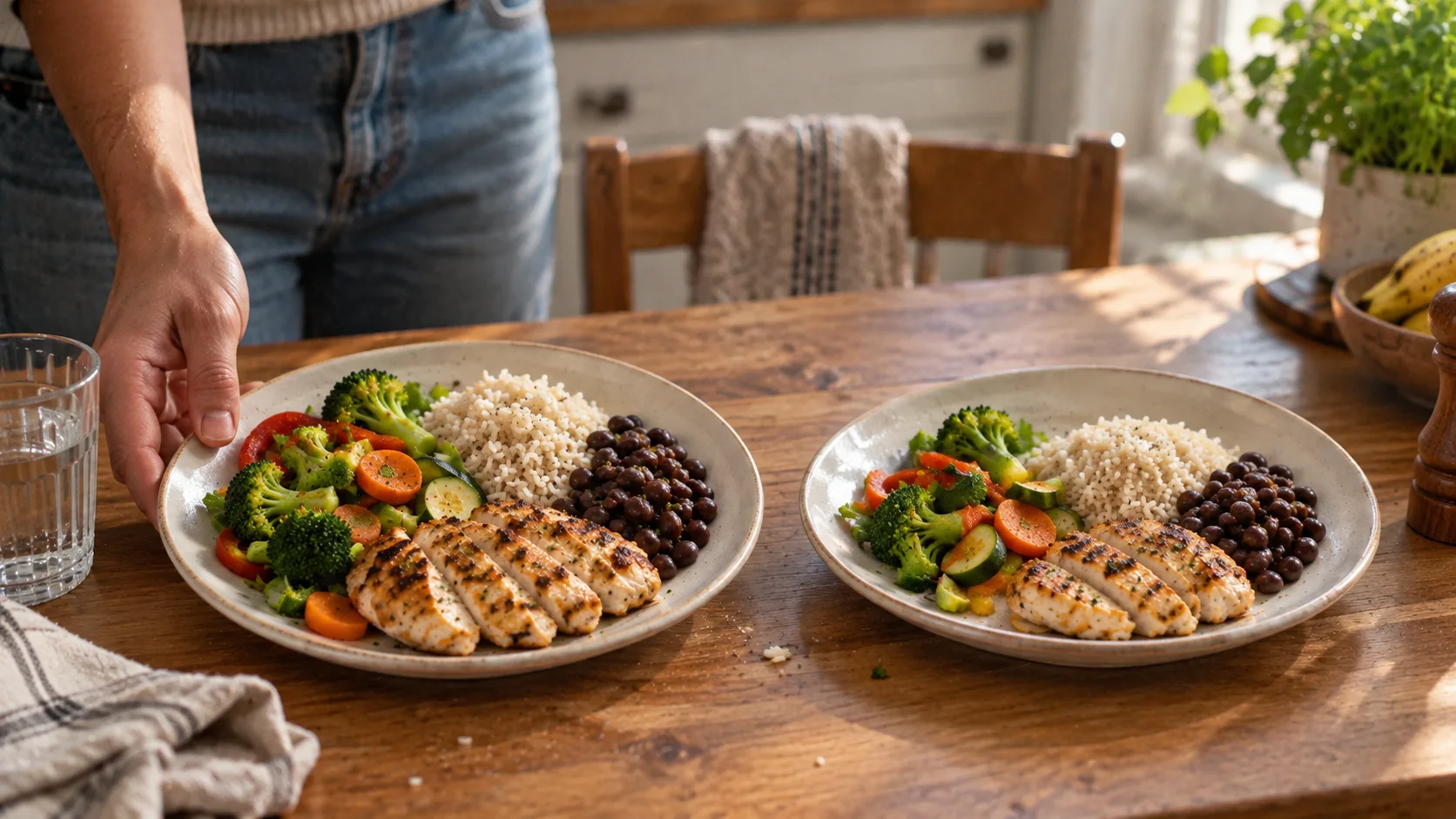
Does the same plate work for an intense training day and a rest day?
Rice, beans, protein, and vegetables can appear on both days. What changes is the training demand, the time until the next session, and the energy you need, without rigid carb-cycling rules.