How much protein is really on this plate?
Weighing everything is tedious. But you can estimate fairly well with three visual references I use every day.
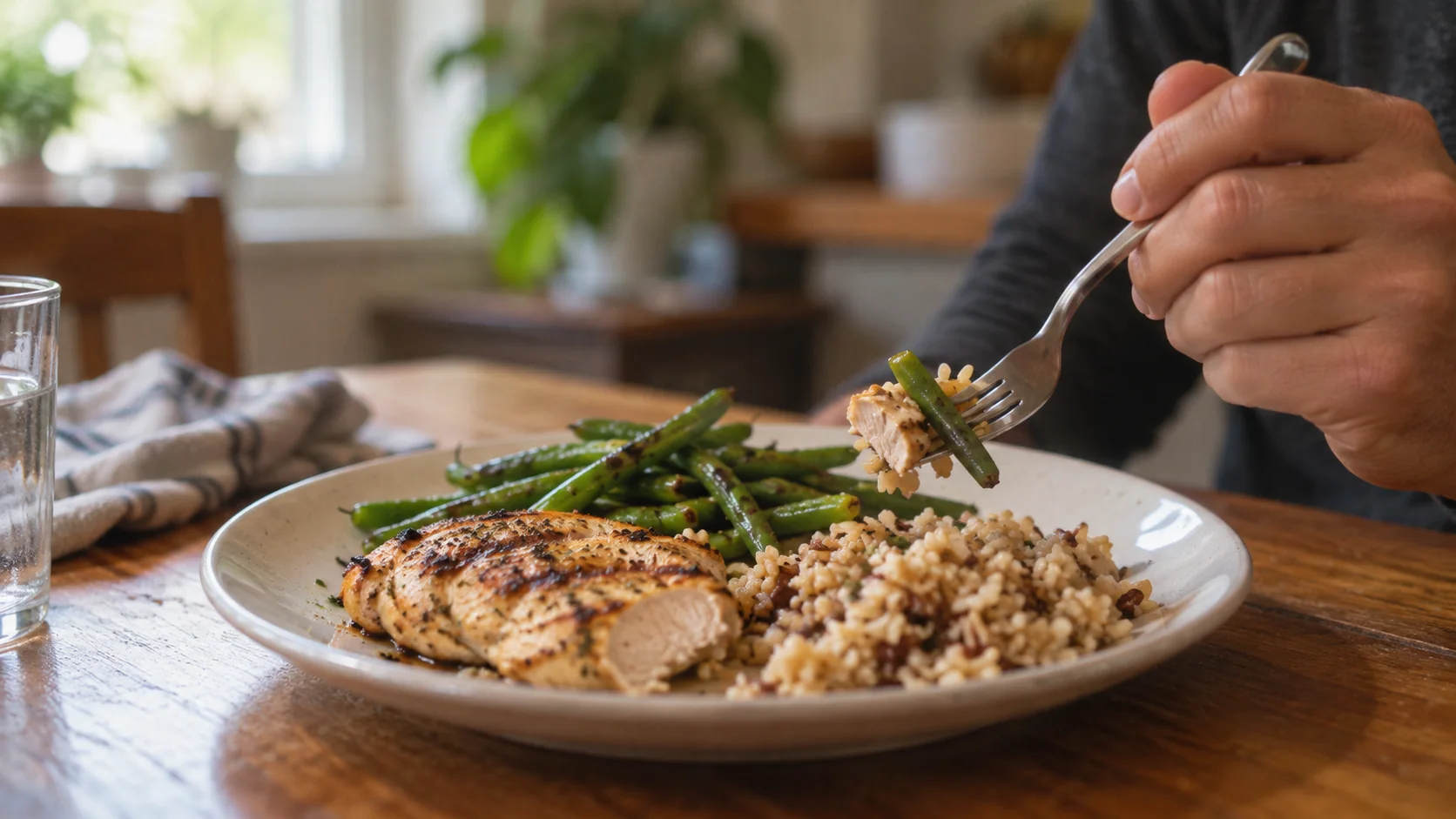
A palm-sized portion, around 120 g of raw lean meat, contains roughly 25 to 30 g of protein.
Visual estimation is a tool, not an absolute truth. It helps you make quick decisions without becoming dependent on the scale.
Remember three references: the palm of your hand for protein, a closed fist for cooked carbohydrates, and your thumb for added fat.
What the science says
- An intake of 1.6 to 2.2 g/kg/day is a well-established range for hypertrophy. Distributing protein across 3 to 4 meals appears to optimize protein synthesis.
How to apply it
- Count palm-sized portions throughout the day as an approximate target.
- Add a protein source to each main meal.
- Do not use supplements as a substitute for whole foods.
Needs vary according to goals, sex, age, and training level. If you have a specific target, it may be worth measuring more precisely for a few weeks.
notice.txt: This content is for educational purposes and was created by a nutrition student. It does not replace personalized guidance from a qualified professional.
Keep reading
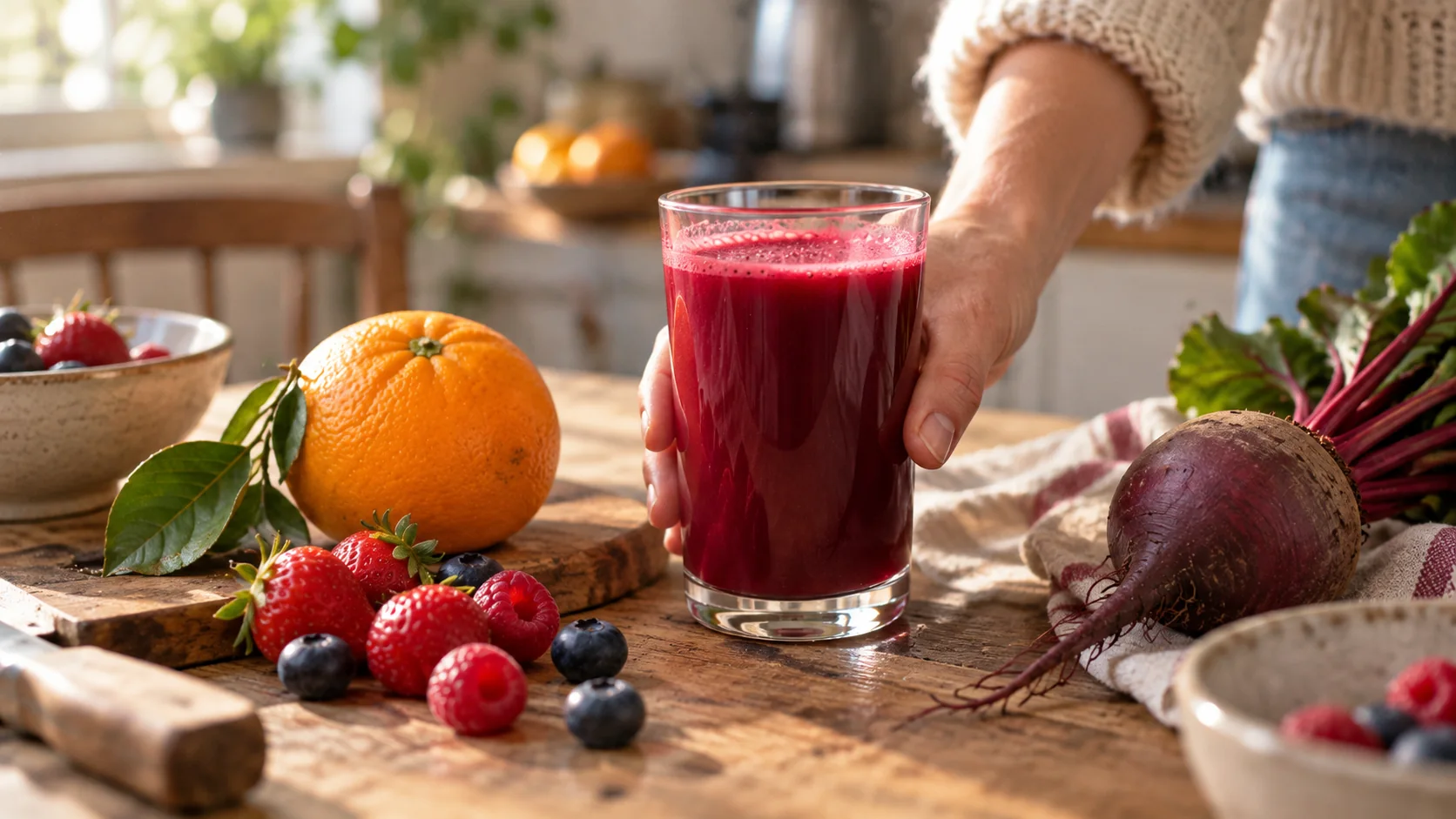 Science explained
Orange, beetroot, and berries every day: what does this combination really offer?
Understand the nutritional and biochemical value of combining orange, beetroot, and berries, the potential benefits, and considerations for daily consumption.
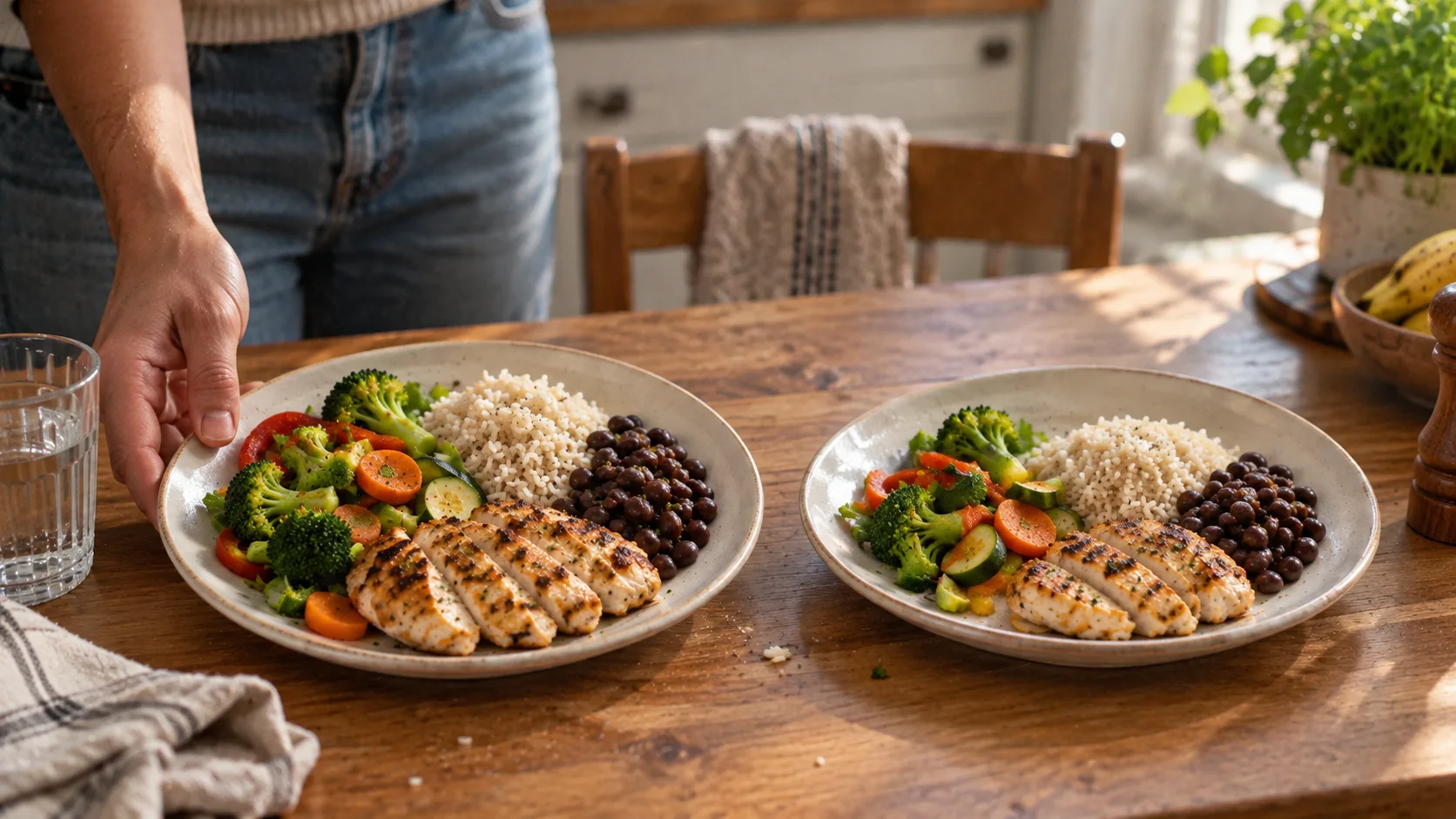 Performance
Does the same plate work for an intense training day and a rest day?
Rice, beans, protein, and vegetables can appear on both days. What changes is the training demand, the time until the next session, and the energy you need, without rigid carb-cycling rules.
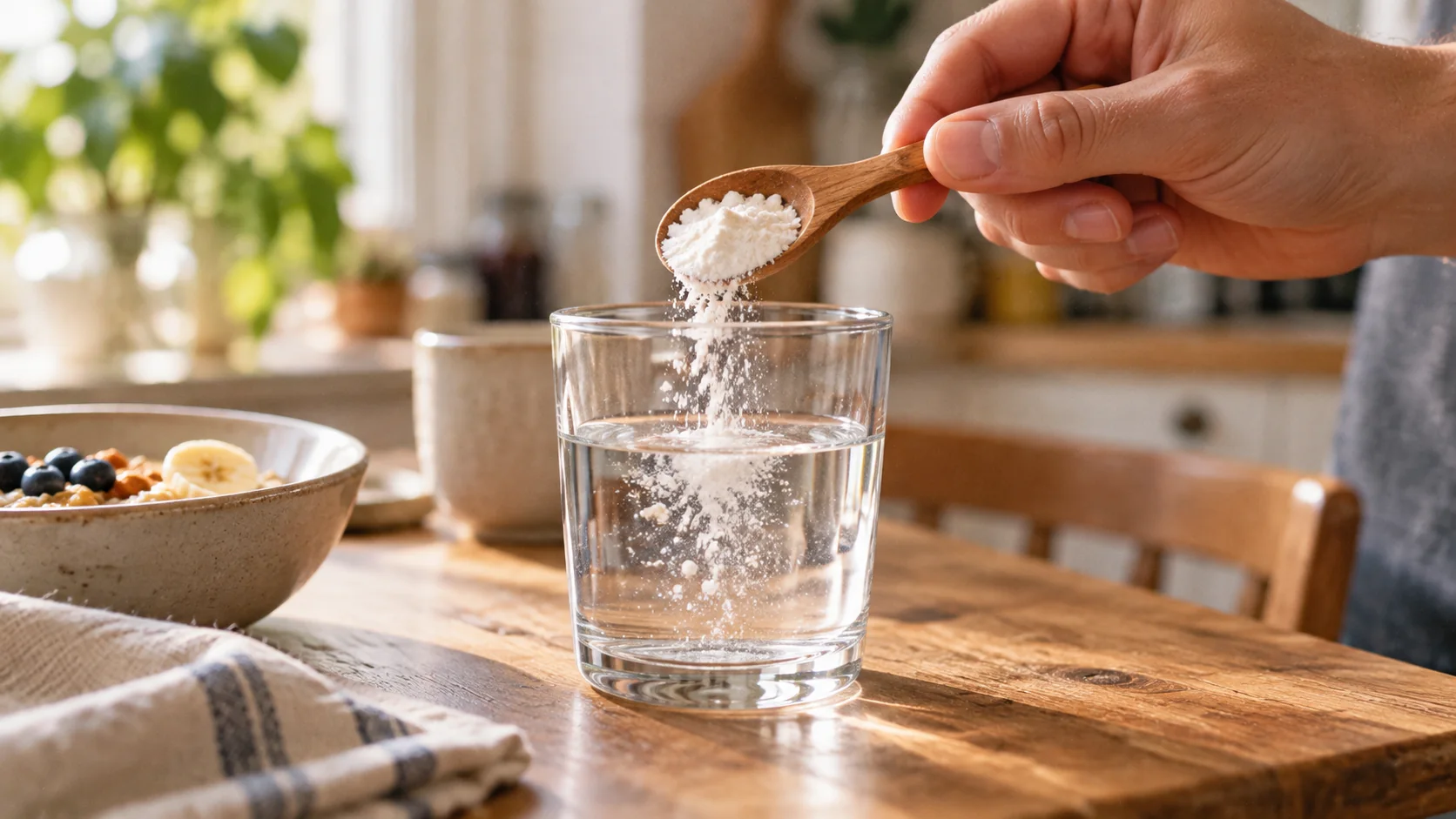 Supplements
Creatine: how to take it, how much, and when, according to science
3 to 5 grams a day, every day, whether you train or not. Understand what creatine does in muscle, how to use it, the loading phase, and the myths still circulating online.