A day of eating as a student
A tight budget, a shared kitchen, and exams this week. What eating looks like when time and money are limited.

A simple, repeatable, affordable base: eggs, yogurt, oats, rice, chicken, tuna, frozen vegetables, and fruit. That is it.
Breakfast: oats + yogurt + fruit + coffee. It costs little and keeps me well fed.
Lunch: a base of rice, a protein source, and vegetables. I batch-cook on Sundays.
Pre-workout snack: bread + cheese + banana. Dinner: similar to lunch, with more vegetables.
What the science says
- Mediterranean-style eating patterns are strongly associated with favorable outcomes. Consistency across the overall pattern matters more than perfection in a single meal.
How to apply it
- Make a weekly shopping list before going to the supermarket.
- Cook enough for two or three days at a time to reduce daily decision-making.
- Accept that weekends and trips will fall outside the usual pattern. That is okay.
This is my day, not a meal plan. Allergies, budget, availability, and preferences change everything.
notice.txt: This content is for educational purposes and was created by a nutrition student. It does not replace personalized guidance from a qualified professional.
Keep reading
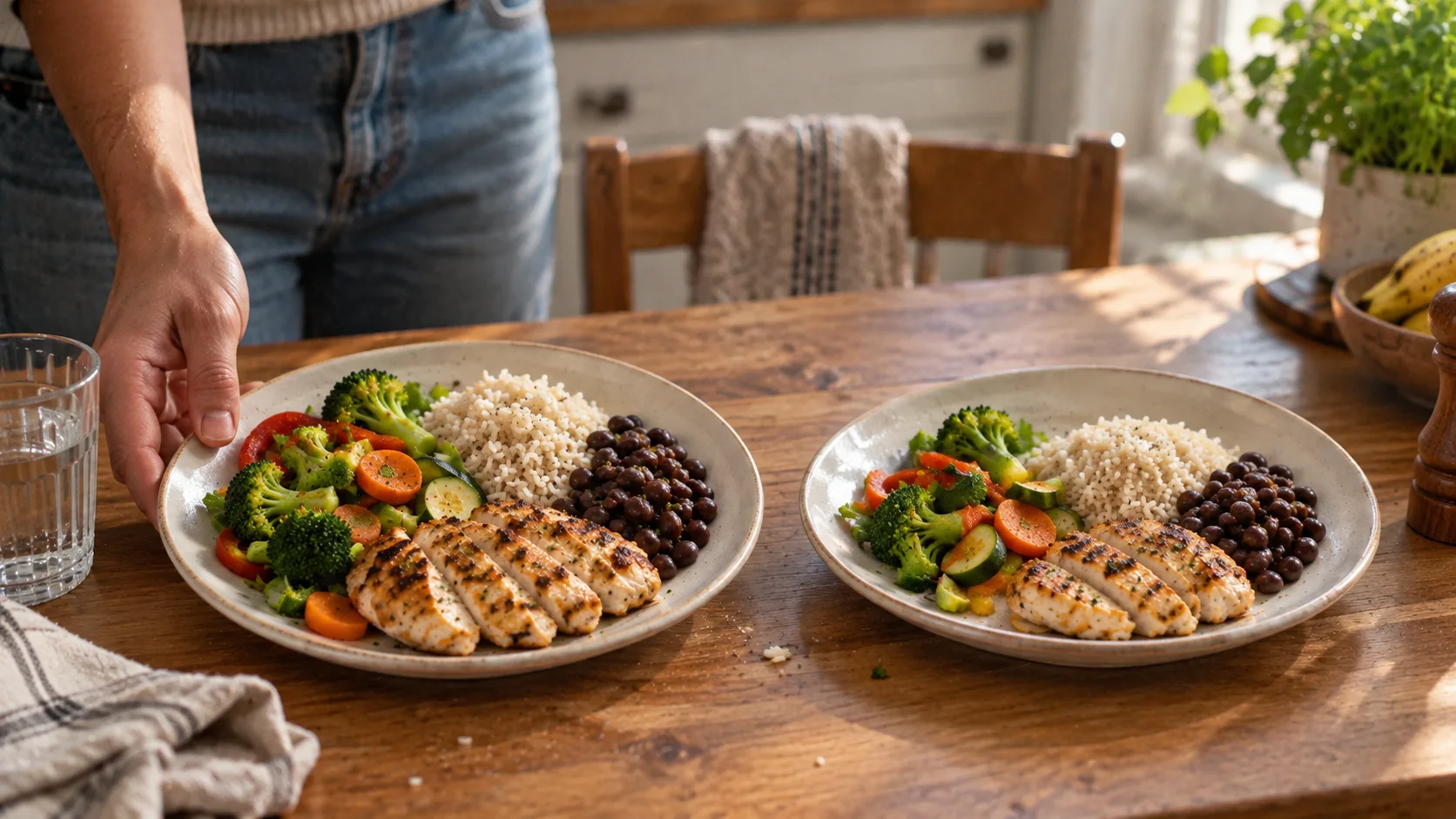 Performance
Does the same plate work for an intense training day and a rest day?
Rice, beans, protein, and vegetables can appear on both days. What changes is the training demand, the time until the next session, and the energy you need, without rigid carb-cycling rules.
 Supplements
Creatine: how to take it, how much, and when, according to science
3 to 5 grams a day, every day, whether you train or not. Understand what creatine does in muscle, how to use it, the loading phase, and the myths still circulating online.
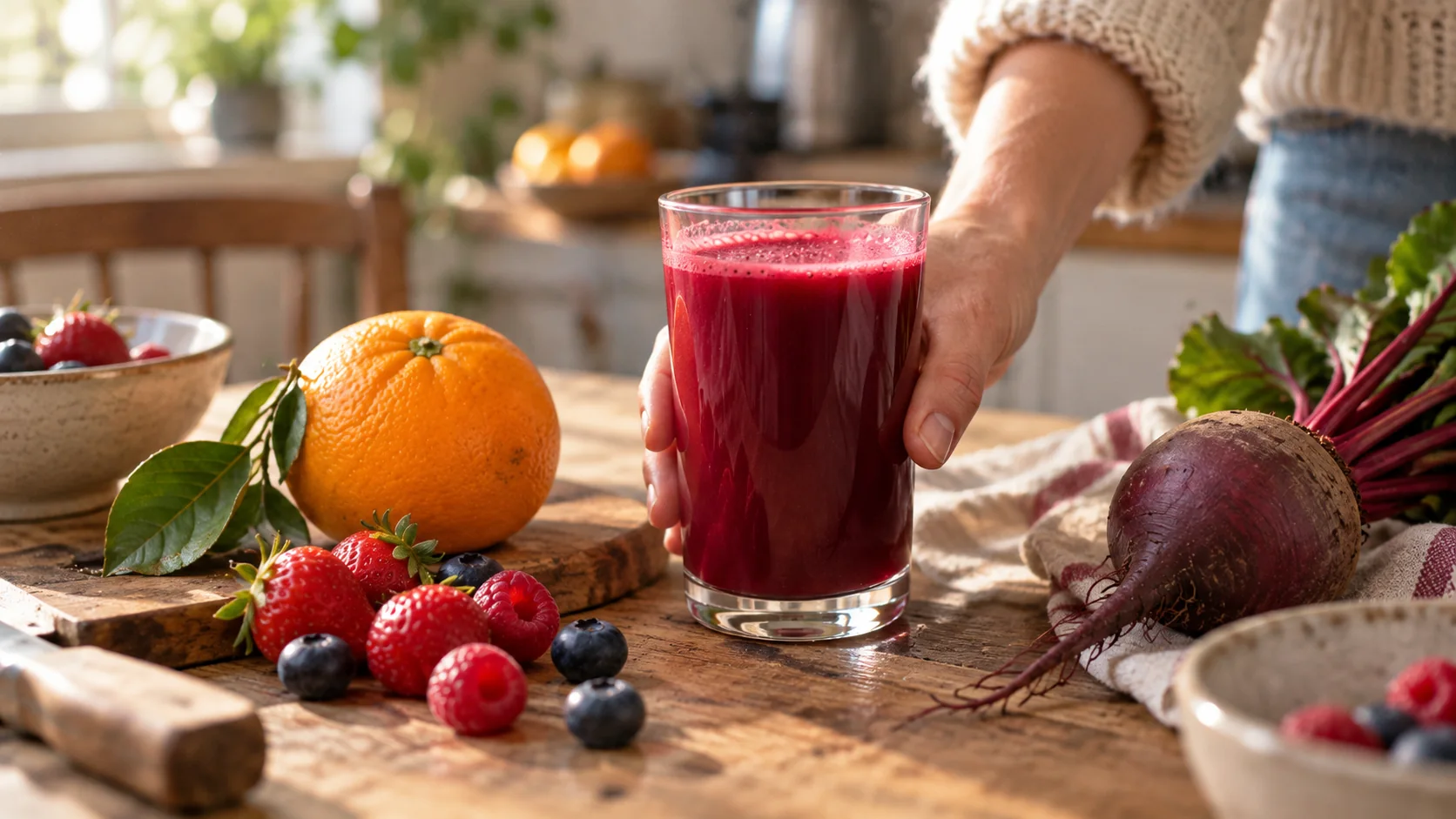 Science explained
Orange, beetroot, and berries every day: what does this combination really offer?
Understand the nutritional and biochemical value of combining orange, beetroot, and berries, the potential benefits, and considerations for daily consumption.