Skyr or Greek yogurt: which should you choose?
Both are protein-dense, but they differ in texture, fat, and fermentation cultures. Let us compare label with label.

Skyr usually has slightly more protein and less fat; Greek yogurt is creamier. In practice, choose the one you enjoy and eat more consistently.
Skyr is technically an Icelandic fresh cheese, although it is commercially sold as yogurt. Greek yogurt is regular yogurt that has been strained several times.
The real differences appear on the label: skyr usually provides 10 to 12 g of protein per 100 g, while full-fat Greek yogurt provides 6 to 9 g.
What the science says
- Both retain live cultures when they are not pasteurized after fermentation.
- Differences in protein between brands are greater than differences between categories.
How to apply it
- Always check the ingredient list: milk and cultures should come first.
- Be cautious with zero versions that contain many additives and sweeteners.
- Pair it with fruit and a carbohydrate source to turn it into a meal.
If you are lactose intolerant, neither is automatically safe; it depends on the brand and the process.
notice.txt: This content is for educational purposes and was created by a nutrition student. It does not replace personalized guidance from a qualified professional.
Keep reading
 Performance
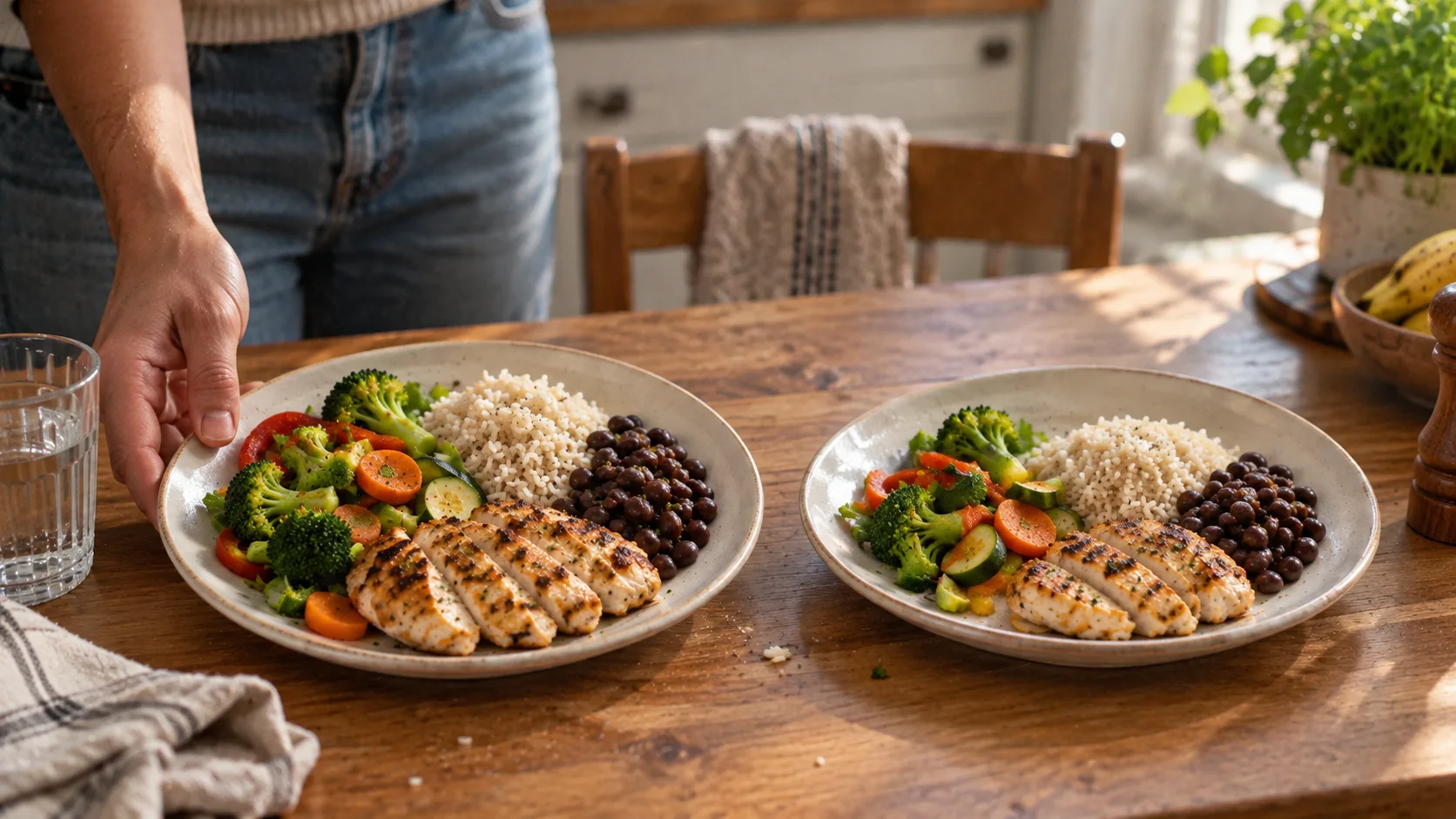
Does the same plate work for an intense training day and a rest day?
Rice, beans, protein, and vegetables can appear on both days. What changes is the training demand, the time until the next session, and the energy you need, without rigid carb-cycling rules.
 Supplements
Creatine: how to take it, how much, and when, according to science
3 to 5 grams a day, every day, whether you train or not. Understand what creatine does in muscle, how to use it, the loading phase, and the myths still circulating online.
 Science explained
Orange, beetroot, and berries every day: what does this combination really offer?
Understand the nutritional and biochemical value of combining orange, beetroot, and berries, the potential benefits, and considerations for daily consumption.